







Gold Prices Fell in 2026 — But The Reasons May Surprise Investors
Traditionally, periods of geopolitical uncertainty strengthen gold.
Wars, sanctions, inflation fears and market volatility often push investors toward bullion.
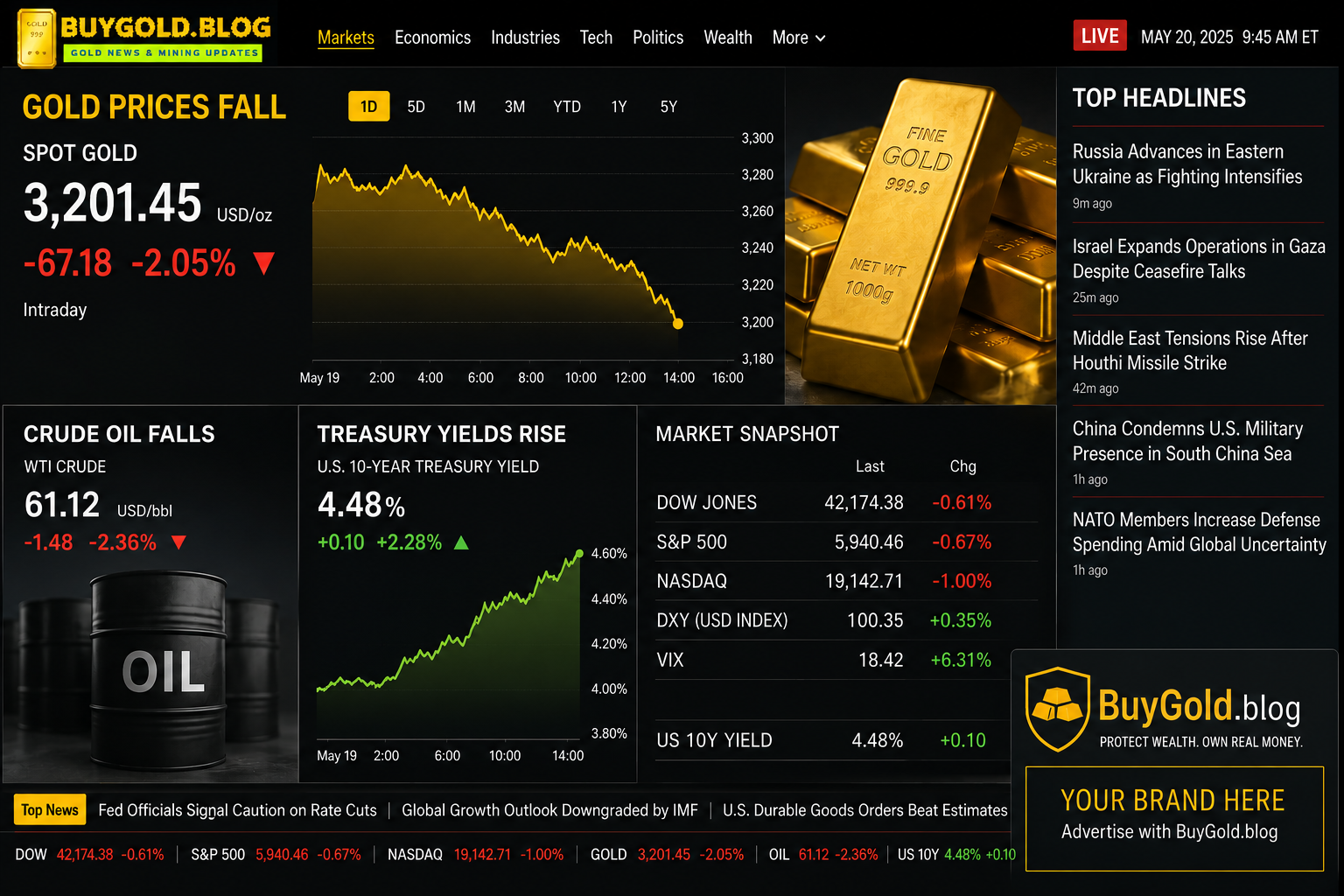
Yet in May 2026, gold prices declined for a second consecutive week despite continued geopolitical tensions and elevated oil prices. Spot gold slipped while futures weakened as markets increasingly anticipated tighter monetary policy. :contentReference[oaicite:0]{index=0}
This contradiction raises an important question:
Why would investors sell gold during uncertain times?
The answer lies in interest rates, bond yields, oil inflation and changing expectations surrounding central banks.
Gold Is Competing Against Higher Yields
Gold does not generate income.
Unlike bonds or savings products, bullion pays no interest.
When government bond yields rise sharply, investors may move capital away from gold toward yield-generating assets.
Recent US Treasury yields reached their highest levels in months, reducing gold’s attractiveness. Markets increasingly price in the possibility of future Federal Reserve tightening. :contentReference[oaicite:1]{index=1}
Higher yields often create downward pressure on:
- Spot gold
- Gold ETFs
- Mining stocks
- Bullion-backed funds
Rising Oil Prices Are Fueling Inflation Fears
Oil approaching US$100/barrel has increased concern over persistent inflation.
Normally inflation helps gold.
However, markets currently believe inflation could force higher interest rates, which in turn strengthen bond yields and pressure bullion. :contentReference[oaicite:2]{index=2}
This creates a cycle:
Inflation ↑
Expected rate hikes ↑
Treasury yields ↑
Gold demand ↓
Gold ETFs Tell A Different Story
Although prices weakened recently, investor appetite for gold remains historically strong.
According to industry research, January 2026 became one of the strongest months on record for physically-backed gold ETF inflows. Global ETF assets reached new highs while holdings climbed substantially. :contentReference[oaicite:3]{index=3}
Major findings included:
- Gold ETFs attracted approximately US$19 billion inflows
- Holdings reached record levels
- North America and Asia led buying activity
- Trading volumes hit new highs :contentReference[oaicite:4]{index=4}
Later in April, ETF demand recovered again with US$6.6 billion inflows globally. :contentReference[oaicite:5]{index=5}
This suggests:
Short-term price weakness does not necessarily mean declining long-term confidence in gold.
Investment Demand Is Still Surging
Gold investment demand reportedly rose sharply in early 2026 as investors sought protection against uncertainty.
ETF inflows and physical bar purchases were among the strongest drivers. :contentReference[oaicite:6]{index=6}
Factors supporting long-term demand include:
✓ Central bank accumulation
✓ Currency diversification
✓ Geopolitical fragmentation
✓ Inflation concerns
✓ Retail bullion demand
✓ Reserve protection strategies
Why Central Banks Continue Buying Gold
Even while prices fluctuate, sovereign institutions continue increasing reserves.
Central banks increasingly treat gold as protection against:
- Dollar concentration risks
- Geopolitical sanctions
- Currency instability
- Reserve diversification challenges
This structural demand may provide long-term support.
Physical Gold Versus ETFs: Which Is Winning?
2026 shows a split market.
Physical bullion demand remains strong in many emerging markets while ETF investors continue rotating into regulated products.
In India, ETF inflows extended for nearly a year despite volatile prices. :contentReference[oaicite:7]{index=7}
Meanwhile some markets recorded weaker jewellery demand due to affordability pressures. :contentReference[oaicite:8]{index=8}
What This Means For African Gold Markets
African producers including:
- Uganda
- Ghana
- Tanzania
- DR Congo
- Mali
could experience continued interest if institutional demand remains elevated.
For African exporters, short-term volatility does not necessarily equal weak long-term fundamentals.
Could Gold Reach New Highs Again?
Several analysts continue forecasting strong prices into late 2026, supported by:
- ETF inflows
- Central bank purchases
- Monetary easing scenarios
- Geopolitical uncertainty
- Retail investment demand :contentReference[oaicite:9]{index=9}
Some forecasts still see potential for gold trading near or above US$5,000/oz under supportive conditions. :contentReference[oaicite:10]{index=10}
Key Takeaways
Recent gold weakness appears linked more to:
Higher yields + inflation fears + rate expectations
…rather than reduced confidence in bullion itself.
Underlying demand drivers remain active.
That distinction matters for investors.
Frequently Asked Questions
Why is gold falling despite wars?
Higher interest rates and bond yields may outweigh safe-haven buying.
Are investors abandoning gold ETFs?
No. Several reports show continued strong ETF inflows in 2026. :contentReference[oaicite:11]{index=11}
Could gold rise again?
Analysts remain divided, but structural demand remains supportive. :contentReference[oaicite:12]{index=12}


