







Published: May 2026
Category: Gold Market News
Author: BuyGold.blog
Table of Contents
- Why central banks buy gold
- Countries increasing reserves
- How gold affects currencies
- Impact on global gold prices
- African implications
- Investor opportunities
- Future outlook
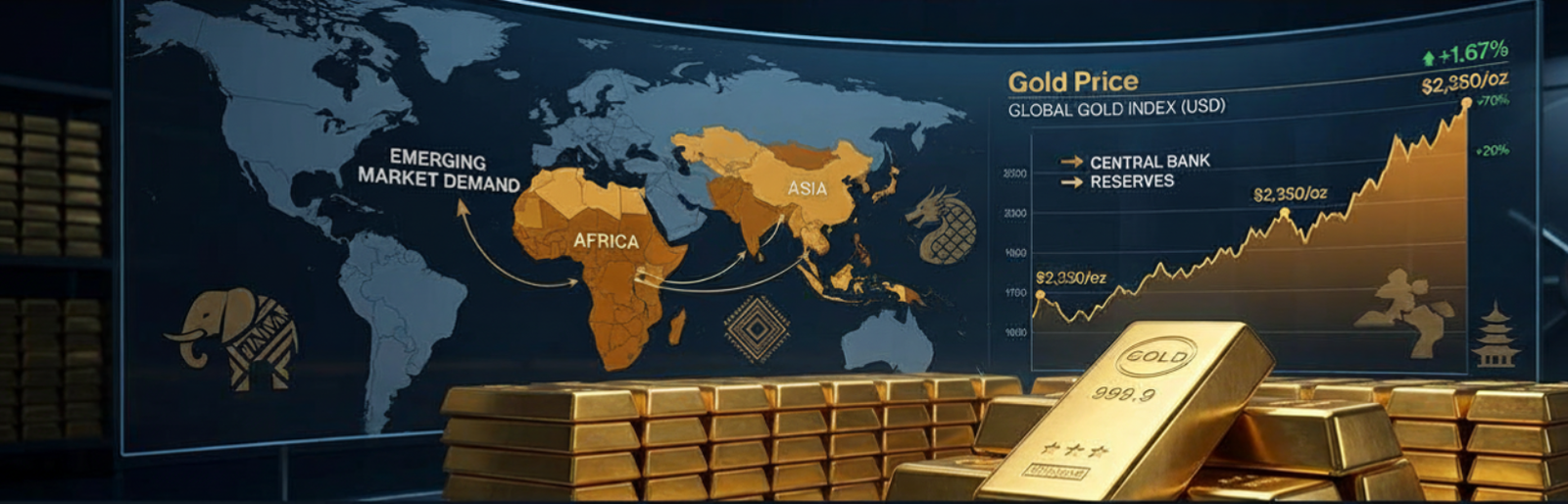
Global central banks have entered another aggressive phase of gold accumulation, reinforcing bullion’s position as a strategic reserve asset.
According to recent industry reports, official institutions purchased roughly 244 tonnes of gold in Q1 2026, exceeding previous averages. Poland and Uzbekistan emerged among the largest buyers. :contentReference[oaicite:1]{index=1}
The trend is no longer viewed as temporary.
It is becoming structural.
Governments increasingly seek alternatives to overexposure to the US dollar amid geopolitical uncertainty, inflation concerns and sanctions risks.
Why Are Central Banks Buying More Gold?
Gold remains one of the few reserve assets carrying:
- No counterparty risk
- High liquidity
- Inflation protection
- Crisis hedging capability
- Global acceptance
The World Gold Council reported central bank purchases remained elevated despite rising prices. :contentReference[oaicite:2]{index=2}
The Largest Gold Buyers In 2026
Countries adding reserves include:
Poland
Poland became one of the biggest buyers with approximately 31 tonnes acquired during Q1. :contentReference[oaicite:3]{index=3}
Uzbekistan
Added roughly 25 tonnes. :contentReference[oaicite:4]{index=4}
Ghana
Ghana increased reserve ambitions dramatically and seeks to purchase up to 30% of domestic mine production. :contentReference[oaicite:5]{index=5}
China
Market analysts believe Chinese reserve diversification continues supporting demand. :contentReference[oaicite:6]{index=6}
How Central Bank Buying Influences Gold Prices
Large sovereign purchases reduce available physical supply.
When combined with:
- ETF inflows
- Retail demand
- Geopolitical tensions
- Mining constraints
…prices may rise further.
Gold demand reached record value levels in Q1 2026 despite elevated prices. :contentReference[oaicite:7]{index=7}
Why Investors Should Pay Attention
Institutional buying often precedes long-term price support.
Historically:
Central bank accumulation → reduced supply → stronger sentiment → increased investment flows.
This does not guarantee immediate gains but strengthens long-term fundamentals.
Africa Could Benefit
African mining economies including:
- Ghana
- DR Congo
- Tanzania
- Uganda
- Mali
may experience increased strategic interest if reserve accumulation continues.
This creates opportunities for:
- Licensed dealers
- Exporters
- Refiners
- Bullion platforms
Gold Outlook For 2026
Analysts expect continued sovereign demand throughout 2026. Some projections estimate central banks may average around 60 tonnes monthly. :contentReference[oaicite:8]{index=8}
Strong buying suggests governments still view gold as essential protection against economic fragmentation.
Frequently Asked Questions
Why are central banks buying gold?
To diversify reserves and hedge geopolitical or currency risks.
Does central bank buying increase gold prices?
Large purchases may support prices by reducing supply.
Which countries buy the most gold?
Recent buyers include Poland, Uzbekistan and Ghana. :contentReference[oaicite:9]{index=9}
Final Thoughts
Gold is evolving from a traditional reserve asset into a strategic geopolitical instrument.
For investors and African mineral markets, monitoring sovereign demand may become as important as tracking interest rates.
Suggested Internal Links
Anchor text:
- Latest Gold Prices
- How to Buy Gold in Uganda
- African Mining News
- Gold Export Procedures


