

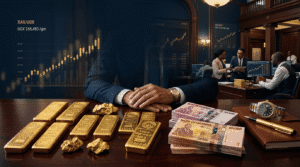





Global Gold Demand Trends Is Changing In 2026
Gold demand trends in 2026 show an important shift.
For years, physical jewelry dominated global consumption.
Now, investment products including ETFs, institutional purchases and central bank accumulation increasingly influence market direction.
This transformation is reshaping how analysts forecast prices and how investors approach bullion.
Recent market reports indicate total gold demand remains resilient despite historically elevated prices.
Gold ETFs Are Driving A New Wave Of Demand
One of the strongest developments in 2026 is growth in physically backed gold ETFs.
ETF inflows accelerated as investors sought protection from:
- Inflation uncertainty
- Geopolitical tensions
- Currency risks
- Equity volatility
- Economic slowdown concerns
Investment demand through ETFs became one of the strongest contributors to market support.
Benefits attracting investors include:
✓ Liquidity
✓ Accessibility
✓ Portfolio diversification
✓ Inflation protection
Why ETF Demand Matters
ETF buying can affect:
- Investor sentiment
- Physical bullion demand
- Price momentum
- Trading volumes
Large inflows often indicate increasing risk aversion.
When investors fear uncertainty, gold allocations frequently rise.
Jewelry Demand Is Slowing In Some Markets
Higher prices have created affordability challenges.
As gold becomes more expensive, jewelry purchases may weaken in price-sensitive regions.
Reduced jewelry demand has appeared in parts of Asia and other consumer markets.
However:
Lower jewelry consumption does not necessarily equal weak overall demand.
Investment purchases can offset declines.
Investment Demand Is Becoming More Important
The gold market increasingly depends on:
Institutional Investors
Funds and asset managers continue allocating to gold.
Retail Investors
Individual buyers remain active through:
- Coins
- Small bars
- Digital platforms
- ETFs
Wealth Preservation Buyers
Economic uncertainty pushes investors toward hard assets.
Central Banks Continue Supporting Demand
Government reserve accumulation remains one of the strongest long-term themes.
Countries worldwide continue increasing gold reserves.
Reasons include:
✓ Diversification
✓ Reduced currency dependence
✓ Geopolitical protection
✓ Inflation hedging
This institutional demand may support prices over longer periods.
Which Regions Show Strong Gold Demand?
Asia
Continues influencing physical demand and investment activity.
Middle East
Gold remains culturally significant while investment buying expands.
Africa
Growing mining sectors and reserve discussions increase relevance.
- Democratic Republic of the Congo (DRC): Dominates the global supply chain for battery manufacturing, holding over 55% of the world’s cobalt reserves and vast high-grade copper deposits.
South Africa: The premier continental powerhouse. It boasts the world’s largest reserves of platinum group metals (PGMs), chromium, and manganese, while remaining a top global gold producer.
Guinea: A global titan in the aluminum supply chain, hosting some of the world’s largest bauxite reserves.
Zambia: A primary driver of the green energy transition, possessing massive copper reserves that are vital for global electrification.
Zimbabwe: Home to highly strategic critical mineral reserves, particularly extensive lithium deposits alongside platinum and gold.
North America
ETF demand remains influential.
Physical Gold Versus Paper Gold
Many investors compare:
Physical Gold
Examples:
- Bars
- Coins
- Bullion
Advantages:
Ownership and tangible value.
Paper Gold
Examples:
- ETFs
- Futures
- Financial products
Advantages:
Liquidity and convenience.
Investor preference increasingly depends on risk tolerance.
What Gold Buyers Should Watch In 2026
Important indicators:
1. ETF inflows
Growing inflows suggest stronger investment demand.
2. Interest rates
Rates influence opportunity costs.
3. Central bank purchases
Reserve accumulation matters.
4. Inflation
Persistent inflation often supports gold interest.
5. Geopolitical events
Uncertainty affects safe-haven demand.
Could Gold Demand Keep Rising?
Several long-term drivers remain active:
- Reserve diversification
- Inflation concerns
- Economic uncertainty
- Portfolio hedging
- Institutional allocation
These factors may continue supporting demand.
Implications For African Gold Traders
For exporters, refiners and dealers across Africa:
Changing global demand patterns could create:
✓ Higher institutional interest
✓ More reserve accumulation
✓ Expanded investment activity
✓ Stronger regional opportunities
Key Takeaways
Gold demand trends in 2026 indicate:
✓ ETFs gaining importance
✓ Investment demand increasing
✓ Jewelry demand shifting
✓ Central banks supporting long-term demand
✓ Gold remaining a major safe-haven asset
Frequently Asked Questions
What is driving gold demand in 2026?
ETF inflows, reserve accumulation and investment demand.
Is jewelry demand falling?
Some markets show weaker jewelry purchases because of higher prices.
Are investors still buying gold?
Yes. Institutional and retail demand remain active.
Does ETF demand affect prices?
Large inflows may influence sentiment and market momentum.
Suggested Internal Links (Rank Math)
Link naturally to:
- Latest Gold Prices Today
- How To Buy Gold In Uganda
- Gold Investment Guide
- African Mining News
- Gold Export Procedures
- Gold Trading Tips
Internal links improve:
✓ Session duration
✓ Crawlability
✓ Rank Math scores
Social Share Text
Gold demand trends in 2026 are changing fast as ETF inflows rise and jewelry demand shifts. Discover what investors and African traders should watch.


