







Ghana Gold Reserve Strategy Could Reshape African Bullion Markets
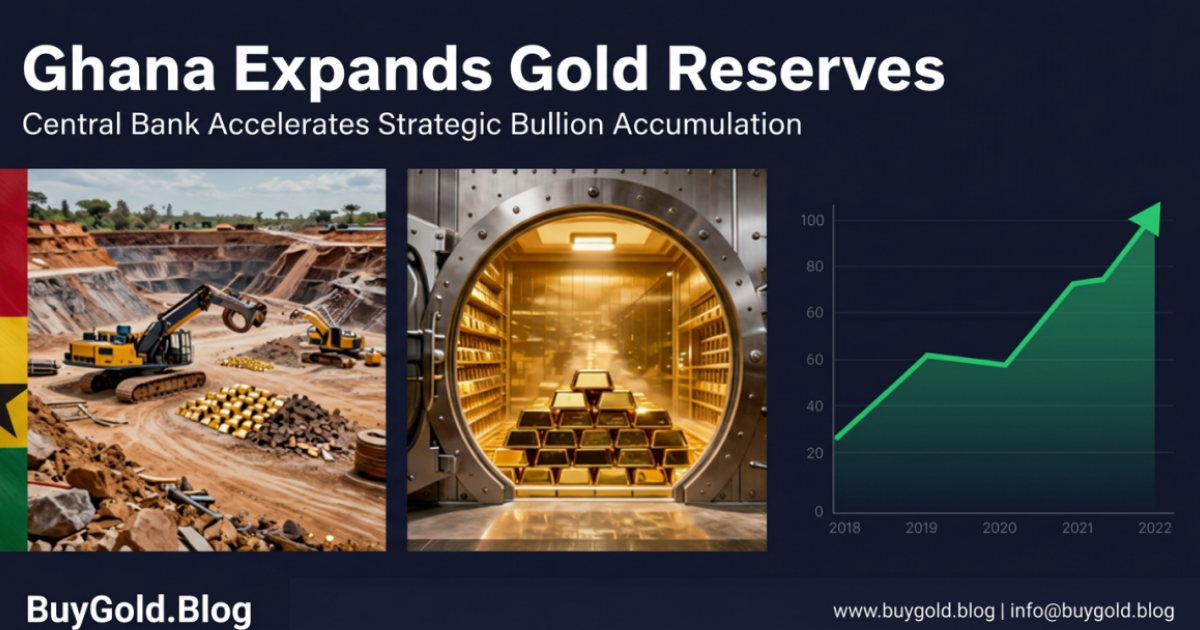
Ghana’s gold reserve strategy is drawing international attention as policymakers seek to increase national gold holdings and strengthen reserve assets.
The initiative reflects a growing global trend where central banks purchase more bullion to diversify away from traditional reserve currencies.
In 2026, Ghana announced plans aimed at expanding domestic gold acquisition programs while strengthening national reserves. The move may influence African gold markets, investment flows and long-term bullion demand.
For countries rich in minerals, accumulating gold reserves is increasingly viewed as an economic protection strategy.
Why Governments Are Increasing Gold Reserves
Central banks traditionally hold:
- Foreign currencies
- Sovereign bonds
- IMF reserve assets
- Gold
Recently, gold has regained importance because it offers:
✓ Inflation protection
✓ Diversification
✓ Reduced currency risk
✓ Safe-haven characteristics
Countries worldwide continue increasing reserves amid uncertainty.
Ghana’s Gold Purchase Program Explained
Reports indicate Ghana intends to acquire larger portions of domestic gold production to strengthen central bank reserves. The strategy reduces reliance on external currencies while supporting reserve accumulation.
Policies encouraging local purchases may create additional domestic demand for bullion. Such approaches can influence:
- Export flows
- Refining industries
- Mining revenues
- Reserve growth
Why This Matters For African Gold Markets
Africa produces substantial amounts of gold annually.
Major producers include:
- Ghana: ~130–140+ tonnes. Historically known as the “Gold Coast,” it is home to major open-pit operations like the Tarkwa Mine.
- South Africa: ~90–100 tonnes. Famous for some of the deepest, most labor-intensive mines in the world, located in the Witwatersrand Basin (e.g., Mponeng).
- Mali: ~65–100 tonnes. A critical driver of West African gold output, featuring major industrial mines like Fekola and Loulo-Gounkoto
- Burkina Faso: ~50–60+ tonnes. Has experienced rapid sector growth and a 21st-century gold rush with sites like the Essakane mine.
- Sudan: ~50–90 tonnes. A major producer in East Africa that benefits significantly from both industrial and artisanal mining.
- Guinea: ~60–63 tonnes. Known for rich gold and bauxite reserves, with key operations like the Lefa mine.
- Democratic Republic of the Congo (DRC): ~36+ tonnes. Features the Kibali mine, one of the largest and most automated gold operations in Africa
- Tanzania: ~45+ tonnes. Rich in gold resources, home to major operations like the Geita and North Mara mines
If more African governments increase reserve purchases, regional demand for locally produced bullion could rise.
Potential impacts include:
Increased Domestic Buying
Governments purchasing local gold may reduce export dependence.
Stronger Refining Industries
Reserve programs often stimulate refining capacity and formalization.
Improved Mining Investment
Investors may view supportive reserve policies positively.
Higher Regional Competition
Neighboring countries could adopt similar reserve strategies.
Could Gold Exports Be Affected?
Reserve accumulation programs sometimes alter export dynamics.
More domestic purchasing can mean:
Lower immediate exports → Larger national reserves → Greater long-term financial security
Effects depend on policy implementation.
Gold And Currency Stability
Countries with stronger reserves may improve resilience during periods of:
- Currency depreciation
- Inflation shocks
- External debt pressure
- Commodity volatility
Gold reserves are increasingly viewed as strategic assets rather than passive holdings.
What Investors Should Watch
Investors monitoring African gold markets should track:
1. Central bank purchases
Reserve accumulation remains important.
2. Mining regulations
Policy changes influence supply.
3. Export procedures
Formalization affects trade.
4. Refining infrastructure
Improved refining increases value retention.
Implications For Uganda And East Africa
Growing reserve strategies across Africa could increase attention toward East African mineral sectors.
For regional dealers, exporters and licensed traders, evolving reserve policies may create new opportunities.
Could Other Countries Follow Ghana?
Analysts believe additional African economies may strengthen reserve positions if:
- Gold prices remain elevated
- Currency risks increase
- Diversification priorities grow
Reserve competition among emerging economies is becoming more visible.
Long-Term Outlook
The Ghana gold reserve strategy reflects a broader shift:
Gold is moving from commodity status toward geopolitical and financial security asset status.
That trend may continue through 2026 and beyond.
Key Takeaways
✓ Ghana aims to strengthen reserves through gold accumulation
✓ African markets could experience stronger institutional demand
✓ Reserve diversification remains a major global trend
✓ Gold continues gaining importance as a strategic asset
Frequently Asked Questions
Why is Ghana increasing gold reserves?
To diversify reserves and strengthen economic resilience.
Does reserve accumulation affect gold prices?
Large-scale purchases may influence demand and sentiment.
Could other African countries copy Ghana?
Possibly. Similar strategies may emerge across mineral-producing economies.
Suggested Internal Links (Important For Rank Math)
Link naturally inside article to:
- How To Buy Gold In Uganda
- Gold Export Procedures
- Latest Gold Prices Today
- African Mining News
- Gold Investment Guide
- DR Congo Gold Industry


